
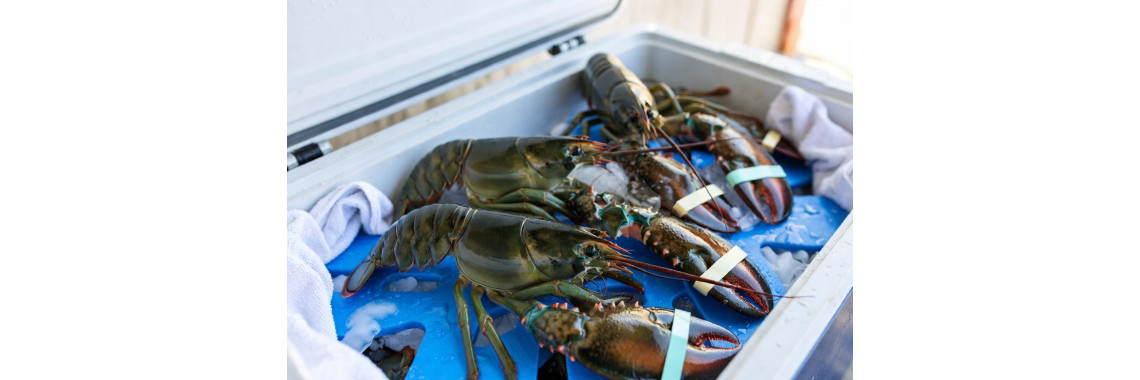
So You Picked Up Your Lobsters Today
A Practical Guide to Keep Them Live and Healthy Until Tomorrow
Congratulations on choosing fresh Ottawa Lobsters! Here’s exactly how to keep them alive and kicking until cooking time.
1. Preferred Method: Refrigerator (Veggie Crisper)
- Store them in the vegetable crisper drawer — this is the best spot in most fridges.
- Keep temperature between 4–10°C (39–50°F).
- Place a damp (not soaking) clean cloth or paper towel over them. You can use a light seawater mix if you have it.
- Do NOT put them in freshwater or let them sit in meltwater.
- Keep the crisper drawer slightly open for air circulation if possible (many have a built-in vent — open it).
2. Cooler Method (Great for Travel or When They Don’t Fit in the Fridge)
- Use a good cooler with food-grade gel ice packs both below and on top of the lobsters (cold air sinks).
- Line the bottom with a damp towel or newspaper.
- Cover the lobsters with another damp cloth.
- Keep the cooler lid closed as much as possible.
- Store the cooler in the coolest place available (basement, air-conditioned room, etc.).
- Check the top ice packs every 4-6 hours. If they are 50% melted, change with fresh ice packs.
General Rules (Both Methods)
- Handle gently — they are strongest right after pickup.
- Avoid direct sunlight, heat, or stacking too deep.
- Best: Cook within 24 hours.
- With proper care, most will stay alive 24–48 hours.
- If any slow down or stop moving, cook them immediately.
Caution
- Fresh water kills lobsters.
- Ice pack on the bottom will keep lobsters raised.
- If you have a drain plug in your cooler, open it.
Cooking Tips
- Bring a large pot of heavily salted water to a hard boil.
- Cook 10–12 minutes for 1–1.5 lb lobsters (adjust for size).
- Always cook them live for best taste and safety.
One Died, What Now?
- Cook or freeze right away.
- Frozen can be thawed and cooked later.
- Only cook and eat if you are sure the temperature did not rise above 10°C for more than 1-2 hours.
- If they are warm, do not cook and eat them.
Questions? Call or text us anytime.
100% of proceeds support the Canadian Aniridia Foundation.
Thank you for supporting local fishermen!